Women Shaping Creative Spaces: Nonkanyiso “Nonka” Mbonambi
Visual Artist, Curator & Founder of CURATICA
In celebration of International Women’s Day, PICHA invited a group of artists, photographers, designers, and cultural leaders to reflect on the women who shaped their creative vision and the changes they hope to see in their industries.
Across photography, architecture, curation, and visual storytelling, these conversations explore how identity, culture, and lived experience shape the spaces we create.
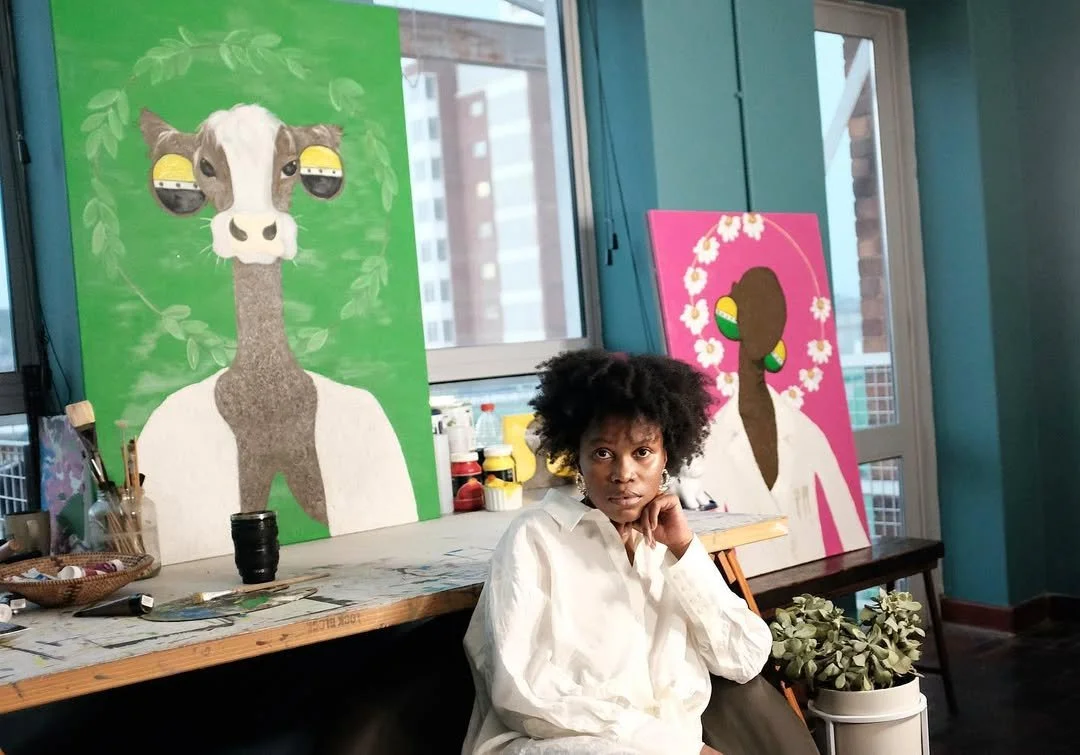
Credit image @dillionsphiri
Johannesburg-based artist and curator Nonkanyiso “Nonka” Mbonambi works across mural painting, exhibition curation, and arts leadership. Through her practice, she explores themes of womanhood, cultural identity, and power, while creating platforms that uplift women across the African creative landscape.
In this conversation, she reflects on the women who shaped her worldview, the pressures women of color face in creative spaces, and why curiosity and individuality remain essential creative forces.
“Being a woman is not a theme in my work. It is the lens through which the work comes through.”
Who are five women who shaped the way you see, build, or create?
When asked about the women who shaped the way she sees and creates, Nonka begins with someone very close to home.
My grandmother, Rejoice Ngema
My grandmother sits at the top of that list without hesitation.
She was the oldest wood supplier to Sappi, the biggest paper milling company in Africa, and the first woman to ride a bicycle in her village in KwaZulu-Natal.
She never waited for permission. She just moved.
That fearlessness is in my blood, and I carry it into every room I walk into.
Mkabayi ka Jama and her twin sister Mmama
These two women broke one of the most painful cycles in Zulu tradition.
At a time when twins were not permitted to both live, they survived and thrived. Mkabayi later became an advisor and regent to Zulu warriors.
She was calculated, strategic, and deeply powerful.
She showed me that a woman can hold immense influence without making noise about it.
Mary Sibande
Her work on domestic workers shifted something in me permanently.
She took people society renders invisible and placed them front and center, showing us how much power and significance they carry.
That repositioning of who gets to be seen is something I think about constantly in my own curation practice.
Dr. Nike Davies-Okundaye
Founder of the renowned Nike Art Gallery in Nigeria, she represents resilience and cultural leadership.
She fought the state and those who tried to benefit from her labor, and she won.
But what inspires me most is how Davies-Okundaye uplifts other women.
She built something and refused to let it be taken, while also creating opportunities for other women to gain skills and agency.
Nesta Nala
The celebrated Zulu ceramicist elevated traditional clay pottery to the global art stage.
She placed traditional clay pots on world auction stages alongside some of the world’s greatest artifacts and jewels.
Rather than waiting for recognition, Nala asserted the value of her work.
She did not ask the world to come down to meet her work. She brought her work up and placed it where it belonged.
“Speaking eleven languages means I can move between worlds. I can access people, stories, and communities that others simply cannot reach.”
How does your identity as a woman influence the way you design, curate, or build your work?
Being a woman is not a theme in my work.
It is the lens through which the work comes through.
Everything I respond to, every story I choose to tell, every decision about how something is shown or felt runs through the experience of being a woman.
More specifically, it runs through the experience of being a woman of color trying to exist and create in a world that was largely not designed for either of those things.
My work constantly asks questions about women’s voices and how to give those voices weight and meaning.
I am very deliberate about how I lead a viewer through that experience.
There is a mothering quality in my approach.
I don’t leave people alone with the work and tell them to figure it out. I guide them.
I want them to feel what I need them to feel, not just interpret it from the outside.
What structural change would meaningfully shift access or equity in your industry?
I want us to dismantle the idea that women of color need to perform whiteness in order to be accepted in creative spaces.
That pressure is real.
It is exhausting.
And it is a lie that has been sold to us for too long.
The expectation that we must sand down our edges, adjust our language, and show up as a more palatable version of ourselves just to fit into rooms that were never built for us — that needs to go.
We should be able to walk in as ourselves.
With our culture.
With our references.
With our ways of seeing.
And be received as the asset we actually are, not tolerated as an exception.
What do you believe is your creative superpower?
I am a jack of many trades, and I genuinely believe that is a gift, not a liability.
Being a mother to five incredible children has taught me a kind of creative intelligence that no institution can hand you.
Speaking eleven languages means I can move between worlds. I can access people, stories, and communities that others simply cannot reach.
And my proximity to power means I understand how to operate within systems while also knowing how to challenge them.
All of that together is what I bring into everything I make and every space I curate.
What would you tell your younger self?
Never lose the kid in you.
That curiosity, that willingness to try things without knowing whether they will work — that is where all the good stuff lives.
And do not conform.
Because weird you is special you.
The parts of yourself that feel too much, too different, too specific — those are not the problem.
Those are the point.
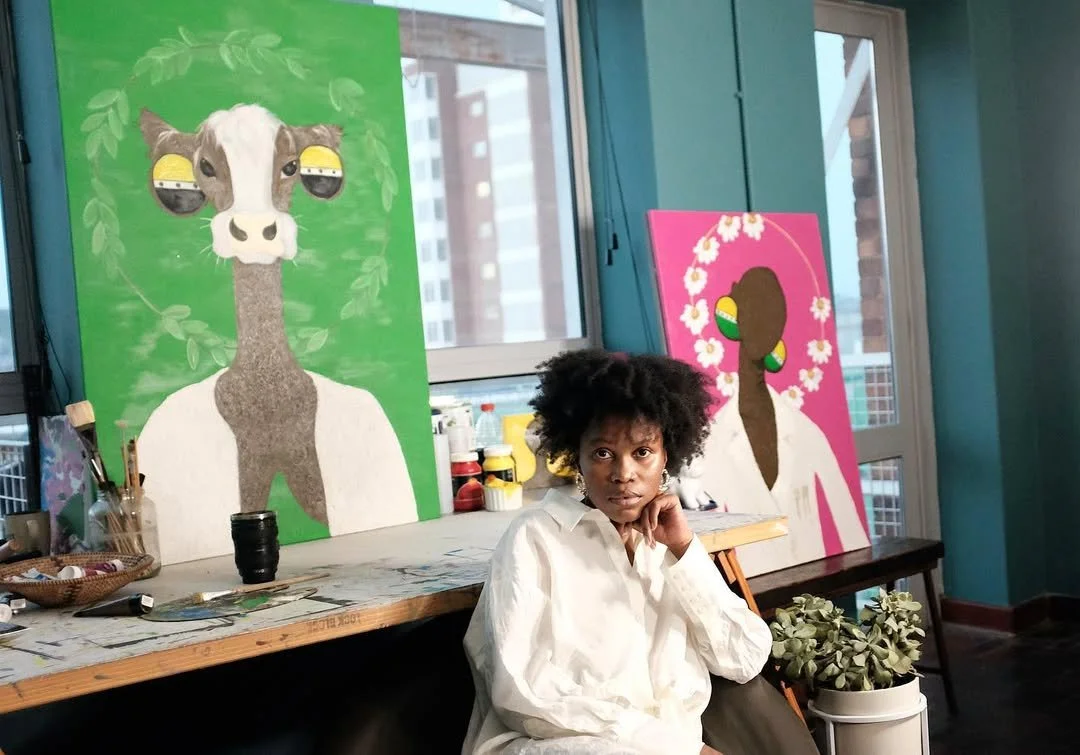
About Nonkanyiso “Nonka” Mbonambi
Nonkanyiso Mbonambi is a Johannesburg-based visual artist, muralist, and curator born in Durban, South Africa.
Over the past nine years, she has built a career spanning mural painting, exhibition curation, and arts leadership across the country.
She is the founder of CURATICA, a womxn-led creative platform that uses art to financially empower and educate women. She currently serves as Managing Director of the Creative Nestlings Foundation.
Mbonambi curates the V&A Waterfront Artist Alliance Virtual Gallery in Cape Town and sits on the National Museums Council, making her one of the youngest individuals to hold that position.
Through murals, exhibitions, and curatorial projects, her work explores themes of womanhood, motherhood, cultural identity, and gender-based violence while consistently amplifying women’s voices within the African creative landscape.
Women Shaping Creative Spaces
This conversation with Nonkanyiso Mbonambi is part of PICHA’s editorial series highlighting women shaping the creative and cultural spaces around us.
Across art, photography, research, and storytelling, these voices remind us that representation is not just about visibility — it is about authorship, leadership, and the power to shape how culture is seen and remembered.
More profiles from this series will be published throughout March.
More from Women Shaping Creative Spaces