
Women Shaping Creative Spaces: Heidi Erdmann
Curator, Art Historian, and Founder of the Cape Town Photography Festival
In celebration of International Women’s Day, PICHA invited a group of artists, photographers, designers, and cultural leaders to reflect on the women who shaped their creative vision and the changes they hope to see in their industries.
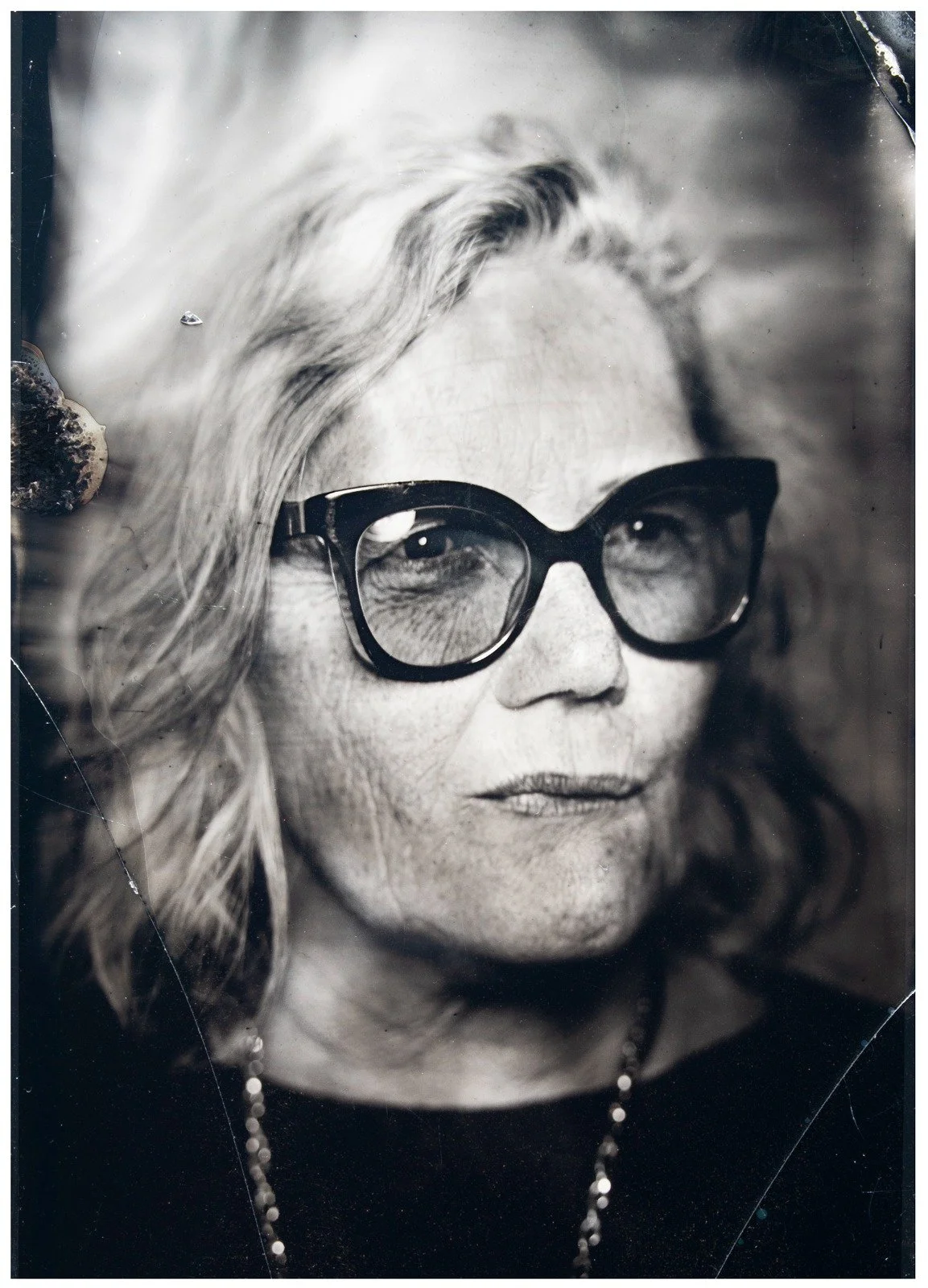
Credit Image: Sean Wilson
Cape Town–based curator and art historian Heidi Erdmann works at the intersection of scholarship, photography, music, and cultural preservation. Her practice bridges intellectual research and public engagement, exploring how sound, image, and memory circulate across geographies and shape cultural narratives.
In this conversation, she reflects on the women who shaped her thinking, the structural realities of the art world, and the quiet discipline required to build cultural platforms that endure.
Who are five women who shaped the way you see, build, or create?
My mother (1927–2011)
My mother is at the top of my list. I only fully understood her strength once I became a mother myself.
She raised eight children with a steadiness I did not recognise as extraordinary at the time. She loved us all unconditionally and gave what she could despite the many challenges.
She taught me that kindness is not a virtue one performs, but a way of being in the world. And she demonstrated, quietly and consistently, that one does not give up, regardless of circumstance.
My first boss, Marilyn Martin (1943–2022)
Marilyn Martin instilled in me the belief that one could have both a serious career and be a present mother.
She also taught me to choose my battles carefully and to recognise that not every battle deserves one’s energy.
Yaa Gyasi
Reading Yaa Gyasi’s debut novel Homegoing (2016) had a profound effect on me.
It is an unflinching portrayal of systemic racism and intergenerational trauma from the Atlantic Slave Trade — one of the most violent coerced migrations in human history.
It is a rare novel that lingers long after reading, penned by a young author, and deserving of global readership, yet it remains banned in some U.S. states.
Miriam Makeba (1932–2008)
Miriam Makeba has always inspired me because she did not separate art from ethics.
She sang, but she also testified.
She understood that voice can be both aesthetic and political. That clarity continues to influence how I think about cultural production.
Sindiwe Magona
Sindiwe Magona’s writing carries dignity, moral clarity, and a profound sense of place.
She writes from lived experience without spectacle.
She reminds me that one can speak firmly without shouting.
How does your identity as a woman influence the way you design, curate, or build your work?
As a former gymnast, I have remained physically strong throughout my life.
For much of my career I did not need to rely on male strength — whether installing exhibitions, using power tools, or driving a one-ton truck. Physical competence sets one apart. It does not always make one popular.
At an art fair in the United States, a group of male gallery directors once asked me to fetch them coffee. They assumed that because I was installing my own booth, I must be an assistant.
I obliged.
Later that day, when I returned dressed as the gallery director I was, they apologised profusely.
The lesson was not about humiliation. It was about perception.
Women are often misread in spaces where authority is coded as male.
And yes, I can multitask.
But more importantly, I feel confident occupying any space without asking permission.
“Miriam Makeba inspired me because she did not separate art from ethics. She sang, but she also testified.”
What structural change would meaningfully shift access or equity for women — especially women of colour and intersectional voices?
In the South African art world, there has been meaningful progress in access for women of colour.
But access alone is not structural change.
What I would like to see is sustained institutional accountability: transparent funding structures, equitable representation in decision-making positions, and long-term mentorship pipelines rather than symbolic inclusion.
Intersectionality requires more than language.
It asks us to examine how race, class, age, disability, religion, and geography intersect in shaping opportunity.
It is not about ranking oppression.
It is about recognising that creative ecosystems thrive when complexity is not flattened.
It is my hope for equity to move beyond visibility to durability.
What do you believe is your creative superpower?
Continuity.
I can connect seemingly disparate fields — music, photography, scholarship, curation, lived experience — into a coherent whole.
I build bridges between intellectual inquiry and public engagement. I see patterns across disciplines and across time.
And I do not give up easily.
In 2025 this manifested in single-handedly conceptualising, planning, and presenting the inaugural Cape Town Photography Festival.
After more than a decade without a dedicated photography platform in the city, the festival revived photographic dialogue through exhibitions, talks, workshops, and public events across venues including 6 Spin Street Gallery, WORLDART, and Simon’s Town Museum.
It brought together local, national, and international voices, reaffirmed Cape Town as a hub for exchange, and laid the foundation for its continuation.
Now in its second edition in 2026, exploring the theme TRUTH, the festival continues to expand that dialogue.
Creating accessible, multi-venue spaces for meaningful encounter is how I turn patterns into tangible creative hubs.
What would you tell your younger self — or a young woman entering your field today?
Do not confuse approval with integrity.
Build competence. Read widely. Learn the technical skills yourself.
Choose your battles carefully. Align yourself with people of substance rather than noise.
And remember: your energy is finite. Protect it.
When the moment arrives, use that protected energy to build something enduring — like a festival or platform that didn’t exist before, but that others can grow from.
About Heidi Erdmann
Heidi Erdmann is a South African curator, art historian, and festival director based in Cape Town.
Her academic research engages questions of identity formation and decolonial strategies for art museums in the Global South. More recently, her work has focused on the syncretic musical traditions of the Indian Ocean region and how sound, image, and memory circulate across geographies.
She holds an MA in Visual Studies and additional qualifications from the Sotheby’s Institute of Art in New York, where she specialised in determining the value of art. She also holds a legal qualification in Estate Law, informing her work with artists’ estates and reinforcing her commitment to ethical stewardship and long-term cultural preservation.
Erdmann is the founder and director of the Cape Town Photography Festival, a newly launched platform dedicated to advancing critical discourse in contemporary photography. Through exhibitions, talks, and public programming, her curatorial practice bridges scholarship and cultural engagement while foregrounding music photography and the evolving politics of representation.
Women Shaping Creative Spaces
This conversation with Heidi Erdmann is part of PICHA’s editorial series highlighting women who are shaping the creative and cultural spaces around us.
Working at the intersection of curation, scholarship, and cultural production, Erdmann reflects on the role of art, ethics, and institutional responsibility in shaping how stories are preserved and shared.
Across photography, art, design, and storytelling, this series brings together voices that remind us that representation is not only about visibility — it is about influence, stewardship, and the cultural narratives that shape how we understand the world.
More from Women Shaping Creative Spaces