

When Continuation Becomes Clarity
By Ramadhan Karali
Here we are in 2026, and the year has opened gently. The days have moved without urgency, without announcement. When it came time to choose the opening image for this post, I paused longer than usual. I could not decide whether to begin with the final photograph of the old year or the first frame of the new one. In the end, I allowed both to exist side by side. A small exception, perhaps, but an honest one. Before you continue reading, I wish you good light in the year ahead, good light before your lens, and good light within you, the kind that steadies rather than dazzles.

My last photo of 2025, taken just a few hours before the end of the year at the baobab festival.
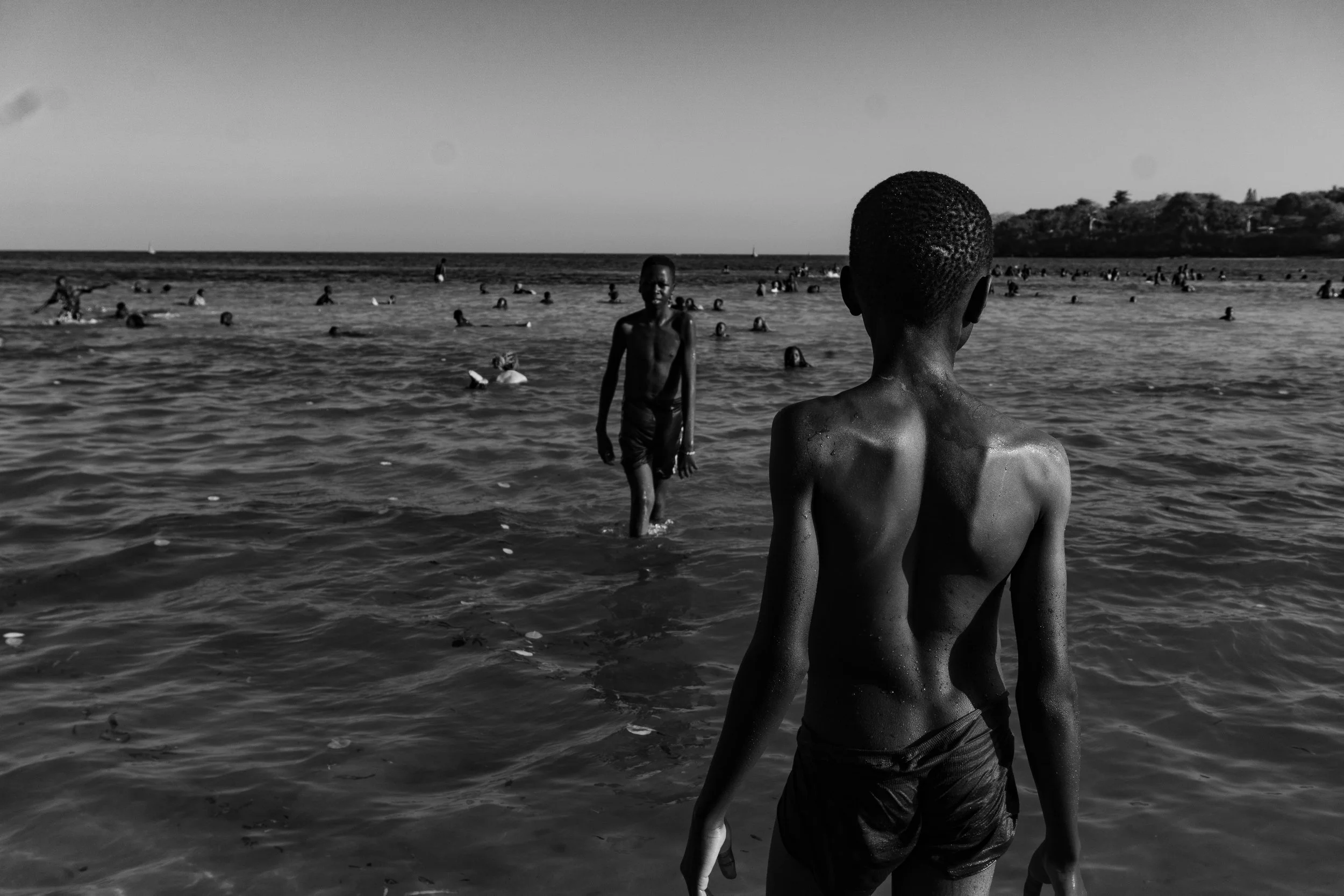
My first photo of 2026, taken at the beach in Kilifi
The new year did not arrive as a rupture for me. It came quietly, without the demand to reinvent myself. It felt like a continuation, a deepening of something already in motion. For the first time, I am not searching for direction. I am already walking, attentive to the ground beneath my feet.
Photography has always been how I listen to the world. I come from places where stories are not announced loudly; they are carried. They live in faces shaped by time, in hands resting on laps, in the way people sit together and allow silence to do its work. Memory lives in courtyards warmed by afternoon sun, in weddings where generations overlap, in markets thick with sound and routine, in pauses between conversation where truth often settles. The camera, I learned early, does not give meaning. It receives it if you are patient enough to let it.
There was a time when I worked with urgency, as if every photograph needed to justify my presence. I was chasing moments, chasing recognition, chasing clarity. I believed speed would bring answers. It did not. Clarity revealed itself only when I slowed down, when I stayed longer than comfort allowed, when I returned to the same places and people and learned to wait. At some point, people stopped performing for the camera and returned to themselves, and that was when the photographs began to breathe.
My work now moves at a different pace. I wait longer. I observe more than I interrupt. I am drawn to the dignity of ordinary life, to elders whose faces hold entire histories without explanation, to communities that continue despite neglect, displacement, and long silences imposed from outside. I photograph weddings not for their spectacle, but for their continuity, for the way tradition adapts without breaking. I photograph streets not for chaos, but for rhythm, for how life arranges itself daily without instruction. I photograph people not as subjects to be taken, but as witnesses who allow me a moment of trust.
In my work, being African is not an aesthetic; it is a way of seeing and understanding. It is knowing that identity carries layers, that beauty does not seek permission, that age, scars, softness, and fatigue are not flaws to be erased. It is understood that stories do not always need subtitles or explanation. Sometimes they only need respect, space, and honesty.
This year, I am not starting over. I am honouring the road that brought me here, the missed frames, the quiet lessons, the moments when nothing happened except learning to see better. I now carry a deeper awareness of my responsibility to the people who trust me with their image, to the spaces I enter, and to the histories I touch, even briefly. Photography, at its core, is a relationship, and relationships require care.
My photographs are not concerned with perfection. They are concerned with truth as it appears in real time, fragile, resilient, unresolved, alive. I allow them to remain that way.
I continue because there is still so much to witness, and because the act of paying attention still feels necessary.
Check Out Ramadhan portfolio here