

Through the lens of a Noob: To be heard is to be seen
By Rading Nyamwaya
It had been more than 2 years after the grant when I waltzed back to Ramadhan the blacksmith’s workshop, happy to announce to him that his face was in a book and that he was now on several people’s desks, coffee tables and displays all around the world. I figured it would be some amazing news and that he would eagerly ask me to show him the image that made him ‘famous’. The first time I met Ramadhan, he was dressed rather sharply, even though his clothes had seen a bit of wear, you could tell he used to be one to appreciate fashion. He was clad in a vintage white Nike sports shirt that had these thick blue lines running across his upper arms and back, bright red, heavily faded corduroy overalls just about being held up by faith and dedication by the resilient knot holding each piece together to his back and a nice set of tan leather shoes. He had two of his colleagues with him, one in a cobalt blue shirt and the other in a striped work shirt folded at the sleeves, and what was most unique about them was that they had on the same pair of sandals and off white pants on.
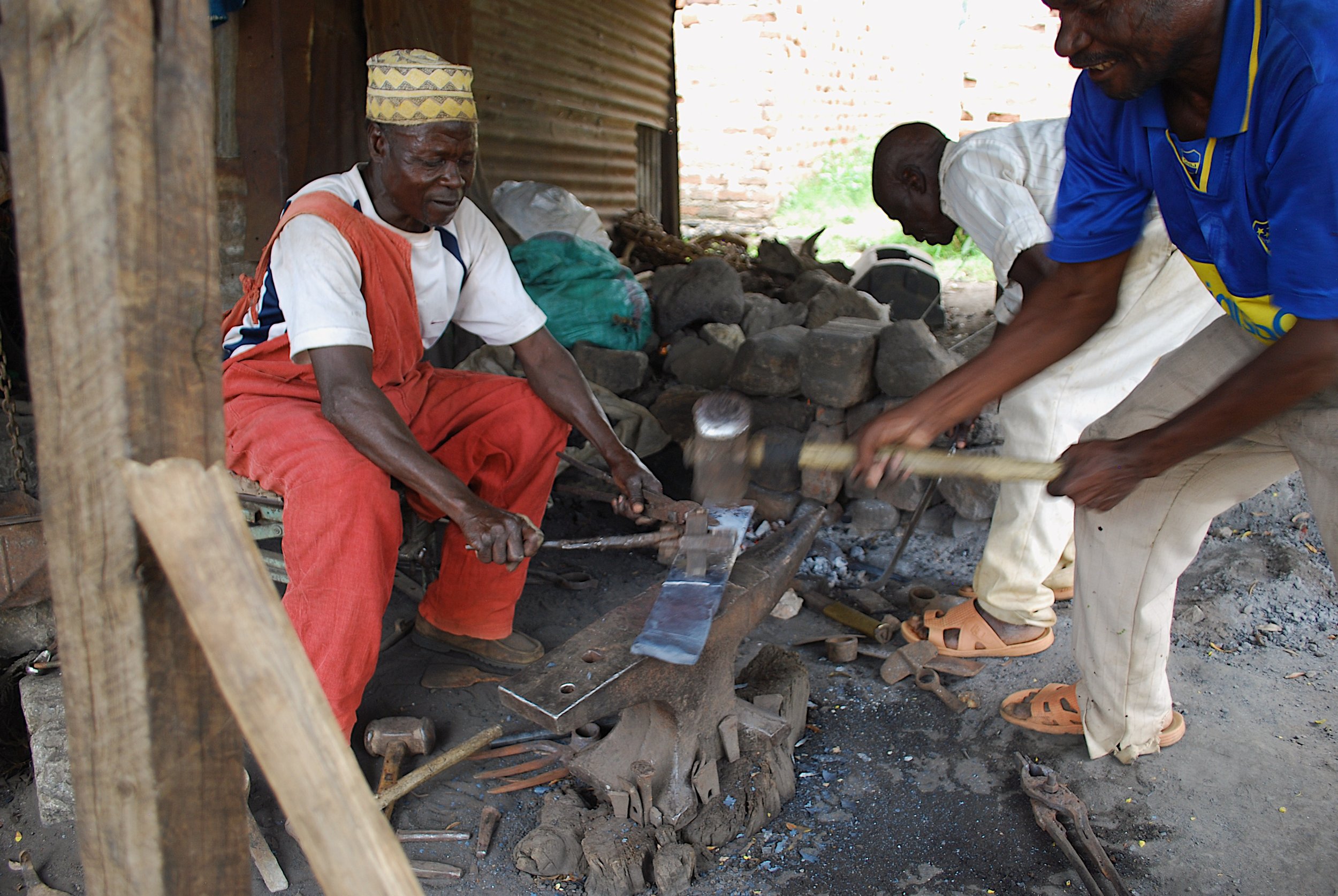
The trio were all busy with the task at hand, with Ramadahan and blue shirt banging and flipping and flipping and banging a flaming hot piece of metal and the other with the ever-daunting task of keeping the fire ever blazing. Despite the pinging and the clanking of the tools against the metal that made it too loud to hear, they were immersed in deep conversation, throwing their heads back in laughter after every quip. Such that they didn’t even hear us approach them when we went up to introduce ourselves. We asked them if we could take their pictures, expecting the normal trope of rejection, but the boys didn’t mind immediately getting comfortable and asking us questions about what project we were doing and why we thought them viable subjects for it.
I went about explaining the PICHA grant, how I got it and what story I wanted to tell and how. I wanted them to understand the role they were playing in helping me tell my story through pictures. I asked him the usual questions about his work. When did you start? Why? What was the motivation? Do you enjoy doing it, and was it a skill he was passing down to his children? He shared that he had started his craft quite young because of an early interest in it. Shortly after doing his Form 4, he ditched the idea of doing A-levels. He would watch the local blacksmith in his hometown and admired how he was able to bend and shape metal to his will. Instead of going on to university, he became an apprentice. His colleagues said they had also fallen to a similar fate, choosing what would make them financially secure and didn’t involve going into the city to toil and become bitter. They were happy with their decision, bragging about how well they worked together; they might as well be ‘wale watoto wanakuja watatu watatu’, meaning triplets. I captured those moments of concentration they would muster before or after they burst into laughter amid tales of youth and life and work.
He gave me some life advice and wished me well with my project. The contraption keeping the flame alive was the skeleton of a bicycle with just one wheel positioned next to a boulder disguised as a ‘chair’ and some strong string attached to it that got another contraption to fan the flame - it was simple physics at work. I got to sit on it and understood how much effort went into this single task. I was severely grateful that the three had been so receptive, accommodating and amazing models.
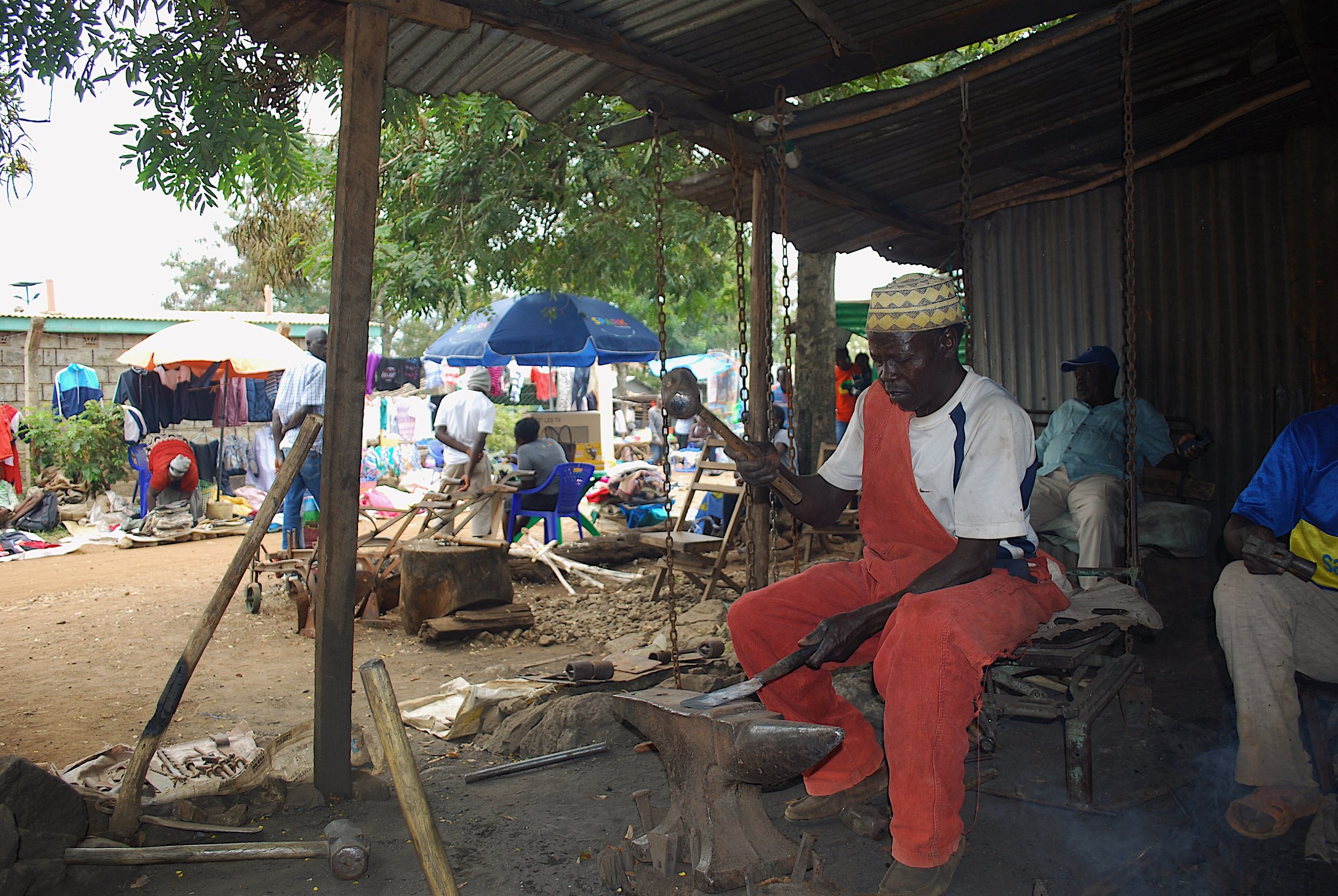
I now wandered into Ramadhan’s workshop with the familiarity of a long-lost aunt or uncle coming home soon after hearing there was a bumper harvest. I was excited to recall stories again and to catch up after years, and share the news that he had made it into a book! His image was one of the ones selected, and he was looking sharp among glossy pages and amazing narratives. You can imagine my shock when Ramadhan didn’t recognise me. I humbled myself into another introduction, pulling out my phone to show him the images and the pages of the Weaving Stories Book so he didn’t think me a con.
PICHA Profile Here