

Why South Africa for PICHA’s Strategy Week?
By Sankara Yambo
South Africa has a complex history. Before my first trip to Cape Town in 2019, I knew little aside from the fact that the country had a drawn-out fight for independence and later installed the benevolent Nelson Mandela as its president, after a 27-year sentence on Robben Island. The country first came into my radar through the film ‘Sarafina’. I was too young to hang on to the plot, but I vividly remember chills running down my neck when the police set their dogs on high school students. However, my experience felt very distant from that: the city was diverse, economically vibrant, with immense beauty, deep history and rich culture.

View of Cape Town from above
On leaving Cape Town International Airport, I was met by the unforgettable, stunning and picturesque view of Table Mountain. The Central Business District was also breathtaking and nothing short of a postcard for affluence. While moving around the city, it was clear that Cape Town was an enormous tourist destination, which made it very cosmopolitan. For me, it was the very definition of a cultural melting pot, and it didn’t take much to understand why it was referred to as the Rainbow Nation.

Milnerton Flea Market
Nairobi was nothing like this, and meaning to understand why led me to a history lesson. Apparently, the Dutch had arrived in 1652 via the Dutch East India Company/ Vereenigde Oostindische Compagnie (VOC) and gradually moved inland. With their occupation came slaves from India, Madagascar, and Southeast Asia, along with a few other groups from West Africa captured from the Atlantic slave trade. These enslaved populations later came to mix with Dutch and other European settlers, as well as the indigenous people, forming the "Cape Malay" and "Coloured" communities in South Africa. When the British came, they and the Dutch fought over resources, with the British emerging victorious and establishing South Africa as an independent state under the Crown. With British administration came segregationist policies, which were later expanded to Apartheid (the Afrikaans name for Apartness).

Non -White Only Bench on Victoria Street Cape Town
While discussing African literature with my father, he happened to ask that I read Thabo Mbeki’s ‘Africa The Time Has Come’, which captures various speeches made before and after independence. The approach the ANC took, as detailed in the book, was a deliberate and principled commitment to truth, justice, and reconciliation rooted in a new inclusive South African identity. Despite facing several challenges to this end, the ANC’s decisions and leadership cemented their place in history for having chosen a framework for an Afrocentric and diverse future.
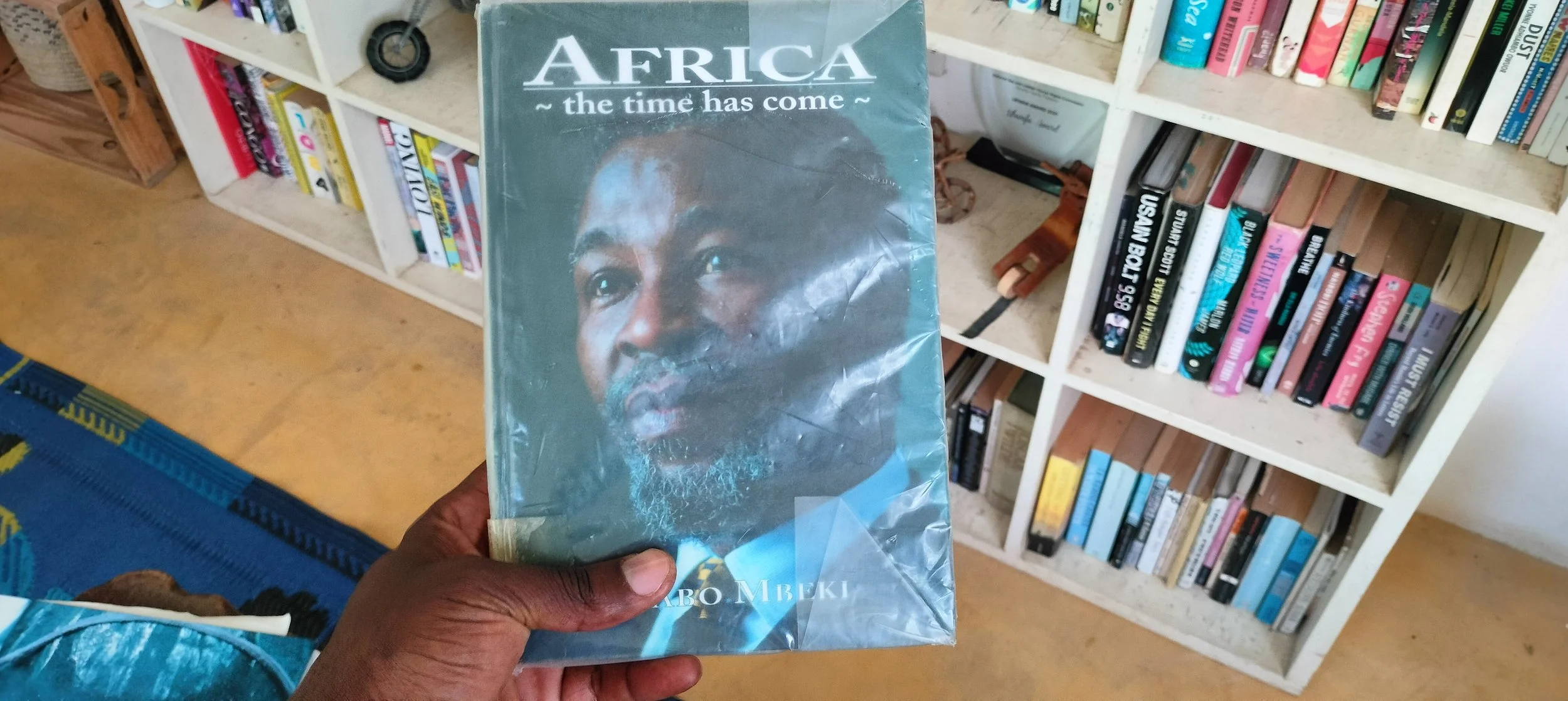
Book: AFRICA ~the time has come~ THABO MBEKI
For PICHA, It became clear to me that the mission to tell richer, more authentic stories is directly aligned with post-apartheid South Africa’s commitment to reclaiming memory and narrative. By prioritising Afrocentric* photographers and visual creators, PICHA intentionally executes its mission to address the historical erasure and misrepresentation of certain realities. embodying the same drive for narrative justice that underpins Mbeki’s and the ANC’s ideology. Furthermore, its industry-leading commission structure also functions as a form of socio-economic redress, ensuring that creators benefit materially from their own images, talent, and cultural knowledge. In doing so, PICHA Stock not only preserves, but elevates underrepresented perspectives while redistributing value back to the communities that have long been excluded from the global creative economy.

Sunset on Signal Hill
Despite the very real challenges South Africa continues to face — including crime, inequality, and periods of xenophobic tension — the inclusive ideas championed by Thabo Mbeki and Nelson Mandela remain an inspiration for both PICHA and the world as a whole. Their vision is an insistence that lasting transformation requires courage, collective responsibility, and a commitment to our shared humanity.
Afrocentricity does not see all Eurocentric ideas as “evil,” but instead insists on placing African perspectives at the centre while still recognising the legitimacy of others. - Molefi Kete Asante